
The Meaning of Merch - Beyond the band tee
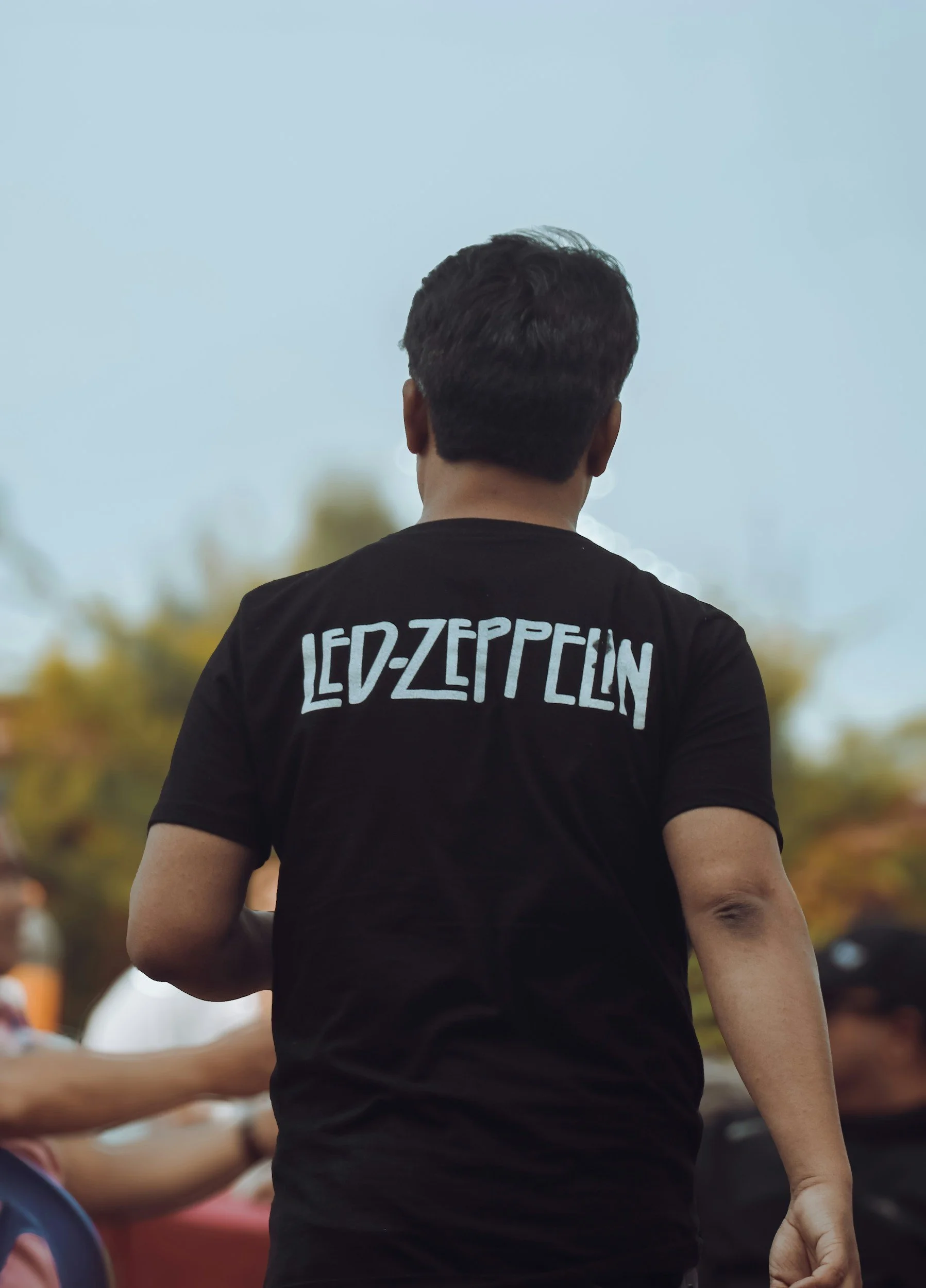
Artists merchandise is an ever growing industry. Today it’s global retail sales are valued at $3.5bn and are projected to reach $16.3bn by 2030.
Iconic pieces of brand merch have made cultural marks on the world of music, fashion and politics. Such as the 'I hate Elvis Presley' badges manufactured by his team in the late 50s, capitalising on both the love and hate for the artist. The Rolling Stones with their popular 1971 album Sticky Fingers, the first to feature their famous lips logo designed by John Pasche, a British Art Student. And famously The Sex Pistols’ ‘God Save the Queen’ T-Shirt, designed by Vivienne Westwood and Malcom McLaren in 1977. The history of these garments and the growth of the industry may lead us to question: What has merch meant for the artists and the wider culture?
It is believed that AC/DC were the first band to make more money on merchandise than on ticket sales. Since then it is no surprise that many artists have made merch a key part of their brand considering the size of the merchandise industry. Justin Bieber worked with cult-followed company Fear of God for his tours. And Frank Ocean used a screen printing stall at his 2017 Lovebox show to print custom merch, running out of ink due to its popularity. Merch sales are especially important to lesser known or independent artists who make less money on high priced concert tickets. Juliette Jackson of The Big Moon explained that merch is ‘actually the main way you make anything’. Singer-Songwriter Liz Lawrence agreed, “'I'm pretty sure the only reason we don’t lose [money] is merch.”
Merch has not only impacted the artist's financial position but the wider spheres of politics and fashion.
The 'God Save the Queen' T-Shirt’s non-conformity, DIY and anti-establishment message reflected the subculture that inspired it.. The Punk movement emerged from economic stagnation, unemployment and class tensions. 'God Save The Queen' and 'Anarchy In The UK' remain the manifesto of punk politics to this day.
Vivienne Westwood associated her merch designs with politics and culture. She used anarchic slogans and a rebellious style to merge fashion with subculture.
The 'God Save the Queen' top was not only emblematic of the message of the Sex Pistols but also that of Westwood and McLaren. In her memoir Westwood said ' “I did not see myself as a fashion designer but as someone who wished to confront the rotten status quo through the way
The piece remains key to the fashion industry to this day. Alexander McQueen referenced the garment in their Fall 2008 collection with a dress picturing Elizabeth II and a British Flag, distorted by pleats and drapes. A version of the shirt appeared in the Costume Institute's 2013 exhibition 'PUNK: Chaos to Couture' at the Metropolitan Museum of Art and is now part of their permanent collection.
Written By Betsy Speck